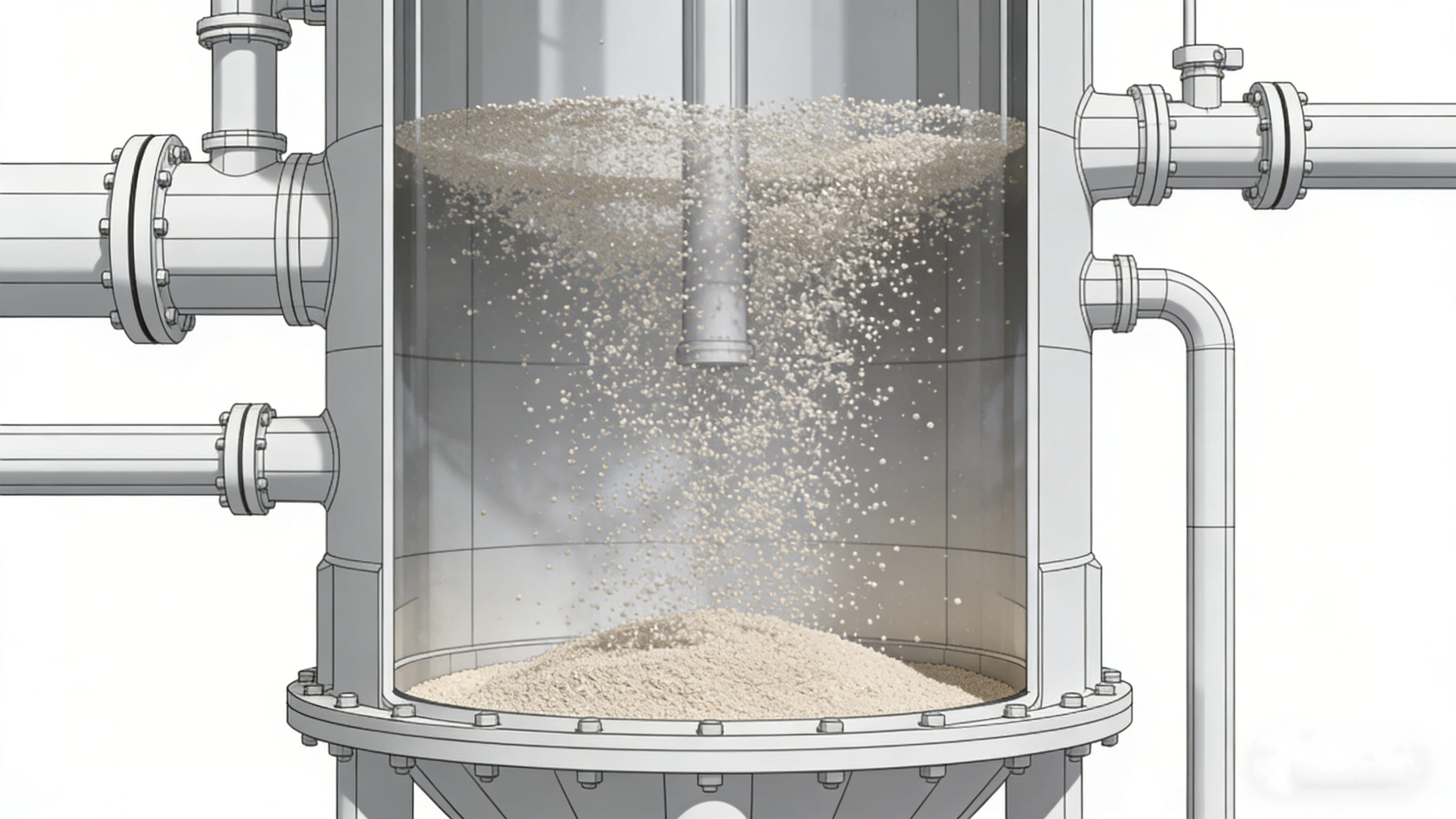
More Than Meets the Eye: How a Catalyst's Shape Powers the Process
In
the world of industrial catalysis, what a catalyst does is
only half the story. Equally important is what a catalyst is—its
physical shape and size. Before any chemical magic happens, engineers must
answer a practical question: What should the catalyst look like as a bulk
material? The answer, which could be powder, pellet, extrudate, or a
monolithic block, is a critical design choice that bridges chemistry and
engineering.
The
"Why": Engineering Imperatives Behind the Form
A
catalyst's physical form is not arbitrary; it is engineered to solve key
challenges in a reactor:
-
Pressure Drop: Minimizing
resistance to gas or liquid flow through the bed.
-
Mass & Heat
Transfer: Ensuring
reactants can reach active sites and that heat (released or absorbed) is
evenly distributed.
-
Mechanical Strength: Withstanding
crushing under its own weight (crush strength) and resisting wear from
particle collision (attrition resistance).
-
Reactor Compatibility: Matching the
catalyst geometry to the reactor type (fixed bed, fluidized bed, slurry).
A
Gallery of Common Industrial Catalyst Forms
1.
Powder & Microspheres (The Free Agents)
-
Typical Size: < 100 microns (powder); 20-150 microns (microspheres, like FCC catalyst).
-
How it's Made: Direct
precipitation or spray-drying of catalyst slurry into hollow microspheres.
-
Best For: Fluidized Bed
Reactors (e.g., Fluid Catalytic Crackers). The tiny size allows
them to be suspended and circulated like a fluid by rising gas, enabling
continuous regeneration and excellent heat transfer. Powders are also the
base material for forming larger shapes.
2.
Extrudates (The Workhorses)
-
Typical Shape: Cylinders,
trilobes, or quadralobes; 1-6 mm in diameter.
-
How it's Made: A paste of
catalyst powder and inorganic binder (e.g., alumina, silica) is forced
through a die and cut, then dried and calcined.
-
Best For: Fixed-Bed
Reactors. This is the most common form. The uniform shape ensures
predictable, low pressure drop. Lobed shapes offer higher external surface
area than cylinders, improving access to active sites. They balance
activity, strength, and manufacturability perfectly for countless bulk
chemical processes.
3.
Pellets & Tablets (The Dense Performers)
-
Typical Shape: Simple cylinders
or spheres made by high-pressure compaction.
-
How it's Made: Dry or slightly
moistened catalyst powder is compressed in a high-pressure tableting press
(similar to pharmaceutical tablets).
-
Best For: Applications
requiring high mechanical density and low porosity. The intense
compaction creates very strong particles ideal for deep, high-pressure
fixed beds. However, the dense structure can sometimes limit the diffusion
of reactants into the particle's core.
4.
Spheres (Beads) (The Smooth Operators)
-
Typical Size: 1-5 mm in
diameter.
-
How it's Made: Via oil-drop
granulation (droplets gelled in hot oil) or spray granulation.
-
Best For: Processes
requiring excellent bed packing and minimal flow resistance. Their
smooth, round shape allows for even loading and the lowest possible
pressure drop. They are often favored in adsorption beds, certain
catalytic reactions, and applications where the catalyst bed is frequently
loaded/unloaded.
5.
Monoliths (The Structured Highways)
-
Typical Shape: A single,
ceramic or metallic honeycomb block with many parallel channels.
-
How it's Made: The catalyst
washcoat (containing the active material) is deposited onto a pre-formed
ceramic (cordierite) or metal honeycomb structure.
-
Best For: Environmental
and automotive applications with very high space velocity, such
as automotive catalytic converters and SCR units for diesel exhaust. The
monolithic structure provides an extremely low pressure drop and is
resistant to attrition, as there are no moving particles. All the action
happens on the thin catalytic layer lining the channel walls.
The
Invisible Enabler: The Binder
For
shaped catalysts (extrudates, pellets, spheres), the binder is
essential. It is typically an inert, refractory material like alumina or clay
that:
-
Acts as a structural
glue, providing crush strength.
-
Creates a macro-pore
network for efficient diffusion.
-
Helps dissipate heat
and protects the active components.
Choosing
the Right Tool for the Job
The
selection is a strategic decision:
-
Need continuous
regeneration? → Powder/Microspheres for a fluidized bed.
-
Running a
high-pressure fixed-bed process? → Strong Pellets or Extrudates.
-
Designing for the
absolute lowest pressure drop? → Monoliths or Spheres.
-
Is diffusion a
limiting factor? → Small-diameter or lobed Extrudates.
In
conclusion, the physical form of a catalyst is a masterpiece of applied
engineering. It transforms a chemically active powder into a robust, functional
component optimized for the harsh realities of industrial reactors. The next
time you consider a catalytic process, remember: the reaction begins not just
at the active site, but with the smart design of the particle that carries it.