
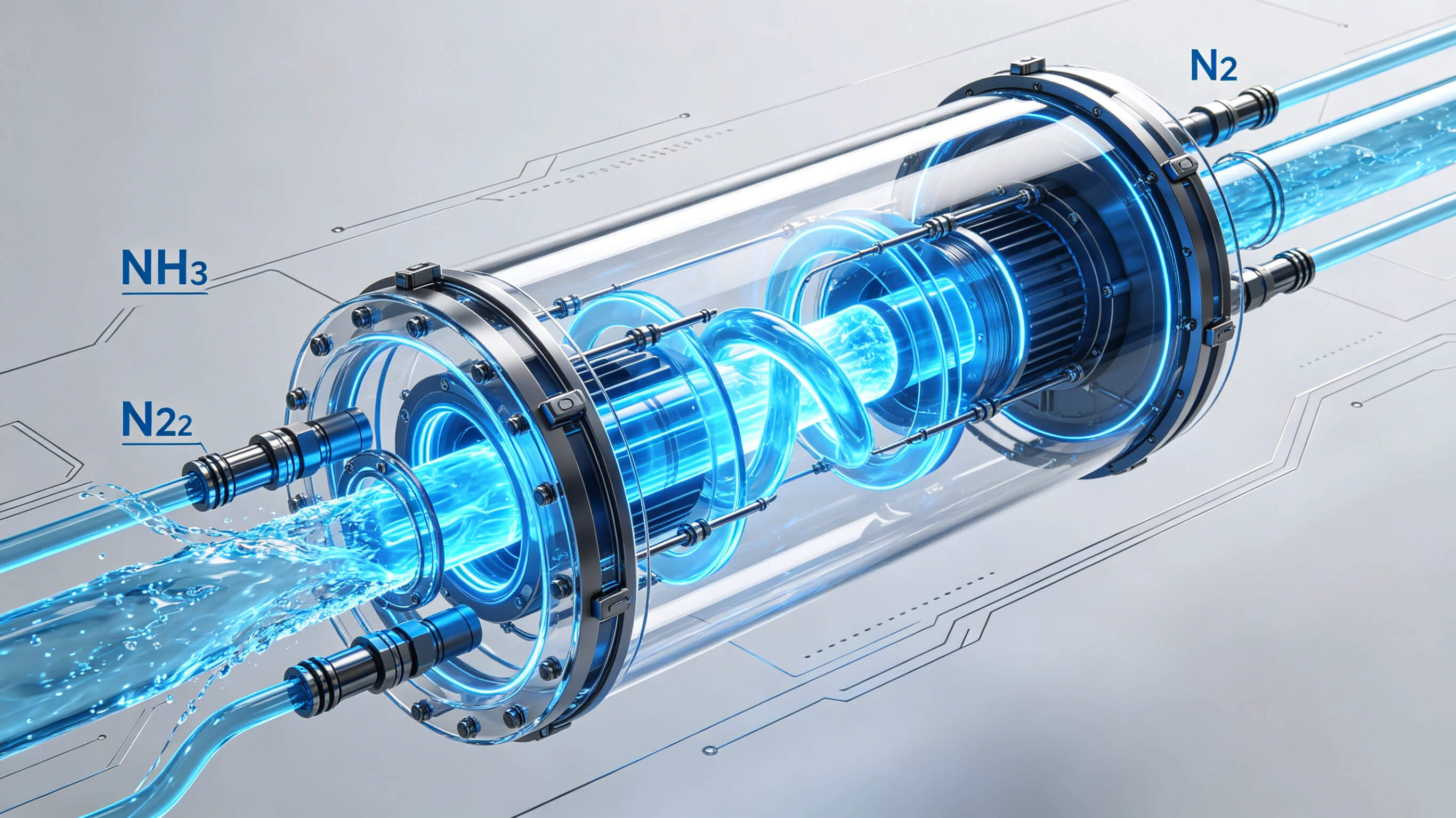
Storing
and transporting hydrogen is hard. It is a very light gas. Compressing it takes
a lot of energy. Liquefying it needs extreme cold. That is why ammonia is
getting attention. Ammonia (NH₃) is a liquid at moderate pressure. It is cheap
and widely available. It also contains almost 18% hydrogen by weight. But to
get that hydrogen out, you need an ammonia decomposition catalyst.
How
Ammonia Decomposition Works
Ammonia
has three hydrogen atoms per molecule. The decomposition reaction is
simple: 2 NH₃ → N₂ + 3 H₂. The challenge is that ammonia is a stable molecule.
Without a catalyst, you need over 800°C. With a good catalyst, you can operate
at 400‑600°C or even lower.
There
are two main types of catalysts. Ruthenium‑based catalysts are
the most active. They work at lower temperatures (350‑450°C). But ruthenium is
expensive. Nickel‑based catalysts are much cheaper. They need
higher temperatures (500‑700°C). Recent research adds promoters like potassium
or cobalt to improve nickel’s activity.
Recent
Improvements and Real Uses
Scientists
are developing bimetallic catalysts, such as nickel‑cobalt or nickel‑iron
alloys. These can approach ruthenium’s performance at a much lower cost.
Zeolite and mesoporous supports help disperse metal nanoparticles and prevent
them from growing larger (sintering) at high temperatures. Some designs even
trap metal particles inside zeolite cages for extra stability.
Where
is this technology used? For fuel cell vehicles, small ammonia crackers at
fueling stations can produce hydrogen on site. For marine and heavy transport,
ships and trucks can carry liquid ammonia and decompose it on board to power
fuel cells or engines. For backup power, ammonia‑to‑hydrogen offers a clean
alternative to diesel generators at data centers or remote sites.
Practical
Challenges to Keep in Mind
First,
temperature. Lower temperature is better for energy use, but it requires more
expensive catalysts. Second, poisoning. Sulfur and chlorides can deactivate the
catalyst. Third, stability. Catalysts must last hundreds of hours without
losing activity. Good design and robust materials help solve these issues.
Summary
Ammonia
decomposition catalysts unlock ammonia as a practical hydrogen carrier.
Ruthenium gives high performance at a premium price. Nickel offers a cost‑effective
alternative for higher temperature operation. With continued improvements,
ammonia‑to‑hydrogen will play a growing role in the clean energy transition.