
Crude
oil is not a clean substance. It contains sulfur, nitrogen, oxygen, and trace
metals, all of which must be removed or reduced before the oil can be turned
into usable fuels. In a modern refinery, this cleanup job belongs primarily to
a class of catalysts used in a process called hydrotreating. Without
hydrotreating catalysts, it would be impossible to produce the low-sulfur
gasoline and diesel that today‘s engines and
environmental regulations demand.
What
Hydrotreating Does
Hydrotreating
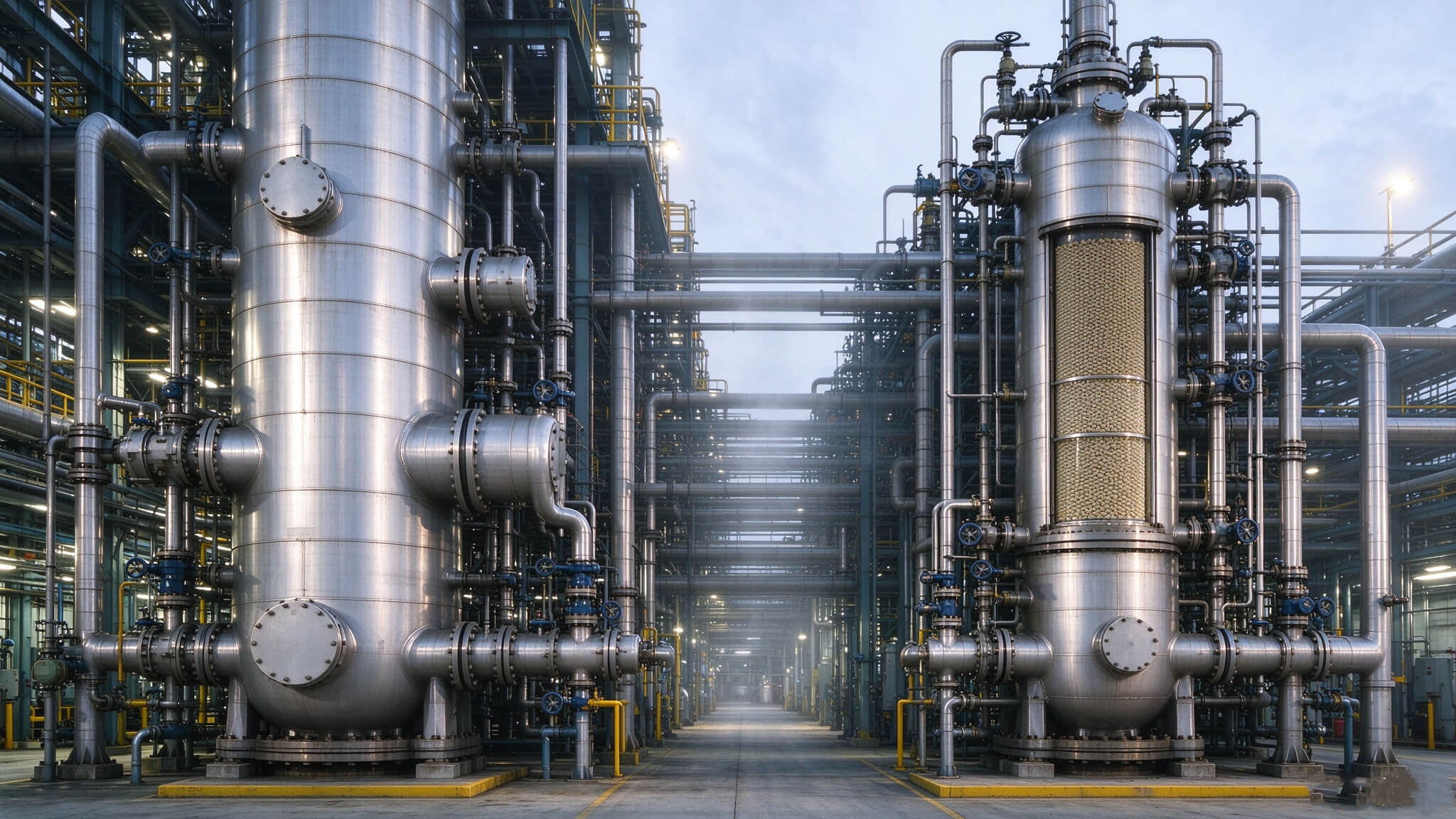
is a catalytic process that treats petroleum fractions with hydrogen gas. The
oil stream and hydrogen are passed together through a fixed bed of solid
catalyst particles at elevated temperature and pressure. On the catalyst
surface, hydrogen reacts with impurities in the oil, converting them into
removable forms. Sulfur is converted into hydrogen sulfide gas. Nitrogen
becomes ammonia. Oxygen becomes water. Metals are deposited on the catalyst
itself. The treated oil, now cleaner and more stable, leaves the reactor and is
separated from the gas stream.
The
primary purpose of hydrotreating is to meet product specifications. Sulfur
dioxide from burned fuel contributes to acid rain and air pollution, so sulfur
content in gasoline and diesel is tightly regulated. Nitrogen compounds poison
downstream catalysts and degrade product stability. Hydrotreating removes these
harmful species, allowing refiners to comply with environmental limits while
producing fuels that burn cleanly and perform reliably.
The
Workhorse Catalysts
The
two most widely used hydrotreating catalysts are based on molybdenum supported
on alumina. Cobalt-molybdenum (CoMo) catalysts are the standard choice
for hydrodesulfurization. They are highly active for removing sulfur from
molecules such as thiols and thiophenes, and they work well for lighter
feedstocks like naphtha and diesel. Nickel-molybdenum (NiMo) catalysts offer
better performance for heavier feedstocks and are more effective at
hydrogenating aromatic compounds. Many refineries use both catalyst types,
selecting the appropriate one based on the feed and the desired product
properties.
The
metals themselves are not active in their oxide form. Before use, the catalyst
must be sulfided, converting the molybdenum and cobalt or nickel into a sulfide
phase. This activated form provides the catalytic sites where hydrogen and
sulfur-containing molecules react. The alumina support plays a critical role as
well, dispersing the active metals and providing mechanical strength to
withstand the reactor environment.
Why
Catalysts Deactivate
Hydrotreating
catalysts do not last forever. Over time, their activity declines, and the unit
must be regenerated or the catalyst replaced. The two main causes of
deactivation are coking and metal deposition.
Coking
occurs when carbon-rich deposits accumulate on the catalyst surface, blocking
pores and covering active sites. This is a gradual process that can be
partially reversed by regeneration—burning off the carbon under controlled
conditions. Metal deposition, however, is permanent. Nickel and vanadium
present in heavier feedstocks deposit on the catalyst and cannot be removed by
regeneration. Once metal levels reach a critical threshold, the catalyst is
spent and must be replaced.
Hydrotreating
in the Refinery Flow Scheme
Hydrotreating
units are placed at various points in a refinery, depending on the feed and the
product. Naphtha hydrotreating is carried out before catalytic reforming,
because the reforming catalyst is extremely sensitive to sulfur and nitrogen.
Diesel hydrotreating produces ultra-low-sulfur diesel for road transport. Jet
fuel hydrotreating removes mercaptans and other sulfur species that would
otherwise cause corrosion and odor. In each case, the catalyst is selected and
the process designed to achieve the specific impurity removal target for that
product stream.
A
Simple Summary